

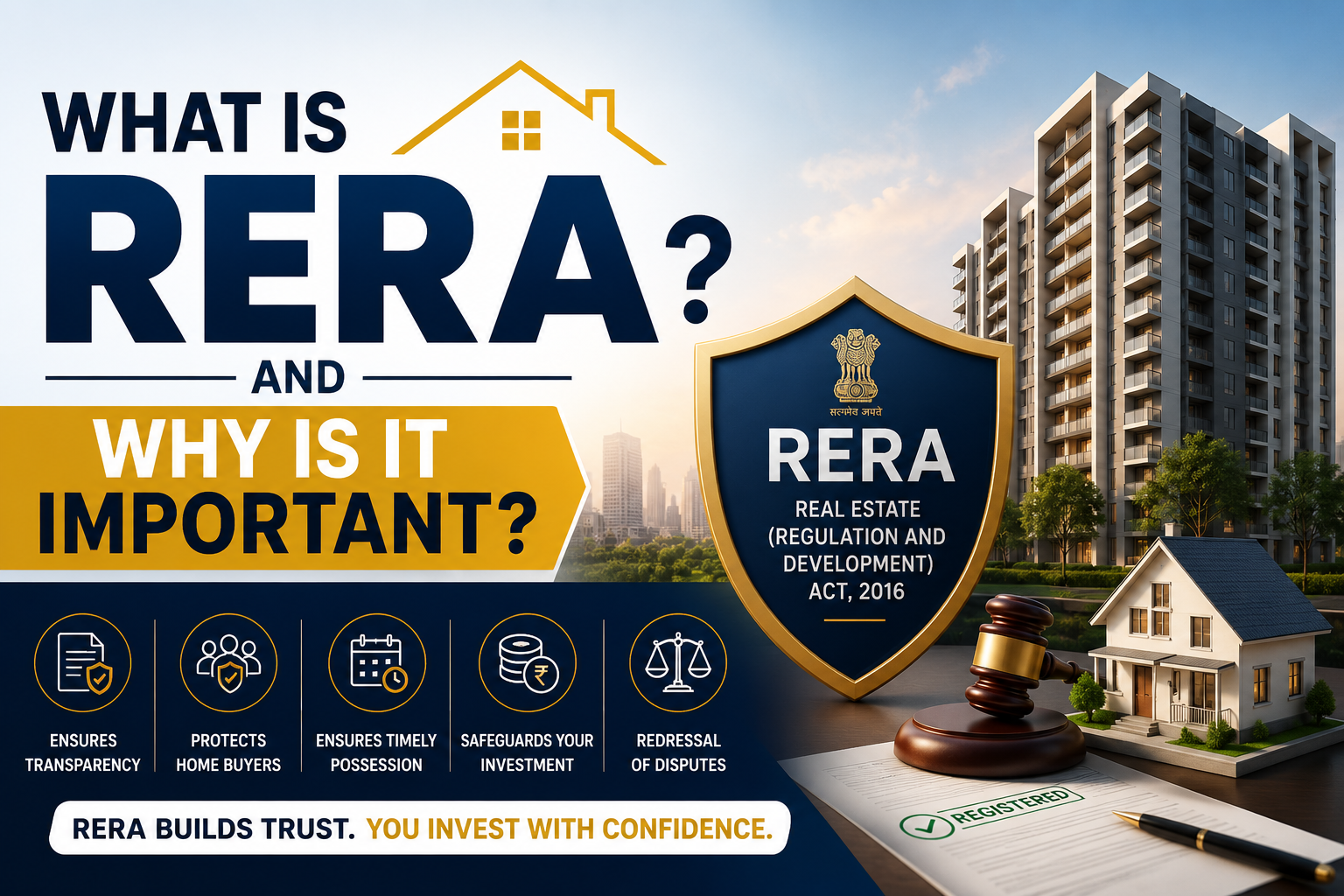
What is RERA and Why is it Important?
Buying a home is one of the biggest financial decisions people make. But for years, the Indian real estate sector struggled with issues like project delays, misleading advertisements, hidden charges, and lack of transparency. To address these challenges, the Government of India introduced the Real Estate (Regulation and Development) Act, 2016, popularly known as RERA.
Today, RERA has become a major factor in building trust between developers and homebuyers. Whether you are purchasing your first apartment, investing in commercial property, or simply exploring the market, understanding RERA is essential.
What is RERA?
RERA stands for the Real Estate Regulatory Authority. It is a law enacted by the Government of India to regulate the real estate sector and protect the interests of homebuyers.
Under this law, every state establishes its own RERA authority to monitor real estate projects and ensure compliance with the rules and regulations. Builders and real estate agents must register eligible projects before advertising or selling them.
The primary goal of RERA is simple:
Bring transparency, accountability, and efficiency to the real estate industry.
Why Was RERA Introduced?
Before RERA, many homebuyers faced serious problems such as:
- Delayed possession of flats
- False promises in advertisements
- Sudden increase in project costs
- Poor construction quality
- Lack of proper legal documentation
- Misuse of buyers’ funds by developers
There was no standardized system to hold developers accountable. Buyers often had limited legal support and lengthy court procedures.
RERA was introduced to solve these issues and create a safer and more transparent property-buying process.
Key Features of RERA
1. Mandatory Project Registration
Developers must register qualifying projects with the respective state RERA authority before selling or promoting them.
This ensures that only legally approved projects enter the market.
2. Transparency in Project Details
Builders are required to disclose important information such as:
- Land ownership details
- Government approvals
- Project layout and plans
- Completion timeline
- Construction progress updates
This information is made available on the state RERA portal, allowing buyers to verify project authenticity.
3. Protection Against Project Delays
One of the biggest advantages of RERA is accountability for project completion timelines.
If a developer delays possession without valid reasons, buyers may be eligible for:
- Compensation
- Interest payments
- Refunds in certain cases
4. Separate Escrow Account for Funds
Developers must deposit a significant portion of buyers’ money into a separate bank account dedicated to that project.
This prevents diversion of funds to other projects and helps ensure timely construction.
5. Standardization of Carpet Area
RERA introduced a standardized definition of “carpet area,” reducing confusion and misleading sales practices.
Homebuyers now get greater clarity about the actual usable area of the property.
6. Fast Dispute Resolution
RERA provides a dedicated authority and appellate tribunal for resolving disputes between buyers and developers more efficiently.
Why is RERA Important for Homebuyers?
Increased Trust and Confidence
RERA has significantly improved buyer confidence in the real estate sector. Buyers can now make decisions based on verified project information instead of relying solely on marketing claims.
Reduced Risk of Fraud
Mandatory registration and legal compliance reduce the chances of fake projects and unethical business practices.
Better Financial Security
The escrow account system ensures that buyers’ funds are used for the intended project, lowering the risk of stalled construction.
Improved Accountability
Developers are now more responsible for meeting deadlines, maintaining quality standards, and fulfilling commitments.
Easier Access to Information
Buyers can easily check project registration numbers, approvals, and updates online through official RERA websites.
How to Check if a Project is RERA Registered
Before purchasing any property, buyers should:
- Visit the official RERA website of the respective state
- Search using the project name or registration number
- Verify:
- Developer details
- Registration status
- Completion timeline
- Legal approvals
- Complaint history
This simple step can help avoid major risks in property investment.
Impact of RERA on the Real Estate Industry
RERA has brought a major transformation to the Indian real estate sector. While it initially increased compliance requirements for developers, it also encouraged professionalism and ethical practices.
Over time, the law has:
- Improved market transparency
- Encouraged timely project delivery
- Reduced unfair practices
- Increased investor confidence
- Organized the real estate market
Developers with strong credibility and compliance standards now enjoy greater trust among buyers.
[…] Click Here to Read More Blogs […]